

See how a precast concrete facade reshapes a house with clean lines, serious durability, and a smaller building footprint.
What if your walls arrived on a truck, ready to lift into place? That is basically how precast concrete facades work, and the result pairs sharp design with strength that shrugs off weather.
Part fortress, part statement piece: that is the appeal of a poured-and-cured exterior. Here are some fresh ideas worth stealing for your own build.
Panels With Geometric Patterns

Hexagons, triangles, and diamond grids cast right into the panel give a wall real presence. The repeating shapes read as one bold pattern from the street.

Depth is the payoff here. A ridged or recessed geometric face makes a flat exterior look layered, and it usually becomes the most talked-about house on the block.

Sunlight does half the work. As the day moves, the raised edges throw different shadows, so the same wall looks soft at noon and dramatic near sunset.

South-facing walls get the sharpest shadow lines, which is why photographers love them.
Built-In Green Wall Panels

Pair climbing plants and planted pockets with gray concrete and you get softness against hard edges. The mix works on both flat panels and stepped facades.

Foliage acts like a jacket for the wall. Leaves shade the concrete in summer, cut heat gain, and filter dust out of the air around the entry.

Color is the other win. Deep green against pale gray panels breaks up the industrial look that raw precast can have.

Ferns, ivy, and trailing succulents all suit vertical planting, turning a blank facade into a growing garden.
Zigzag Modular Panel Layouts

Angled modules set in an alternating rhythm keep the eye moving across the wall. Each panel picks up where the last one left off.

The folded surface reads like motion, almost as if the concrete were mid-step. Stack the zigzag across two stories and the depth doubles.

Angled faces also bounce daylight deeper inside. Rooms behind the wall get softer, more even light instead of one harsh strip near the window.

Corners are the best spot for a zigzag run, since the fold wraps the edge instead of stopping flat.
Concrete With Faux Wood Grain

Cast against timber formwork or textured molds, concrete picks up convincing wood grain. You get the cabin warmth without sanding, sealing, or rot.

The finish looks warm but behaves like stone. No termites, no annual staining, and it holds up through wet winters.

Structure stays untouched. The grain sits only on the outer face, so the panel carries load exactly like a smooth one.
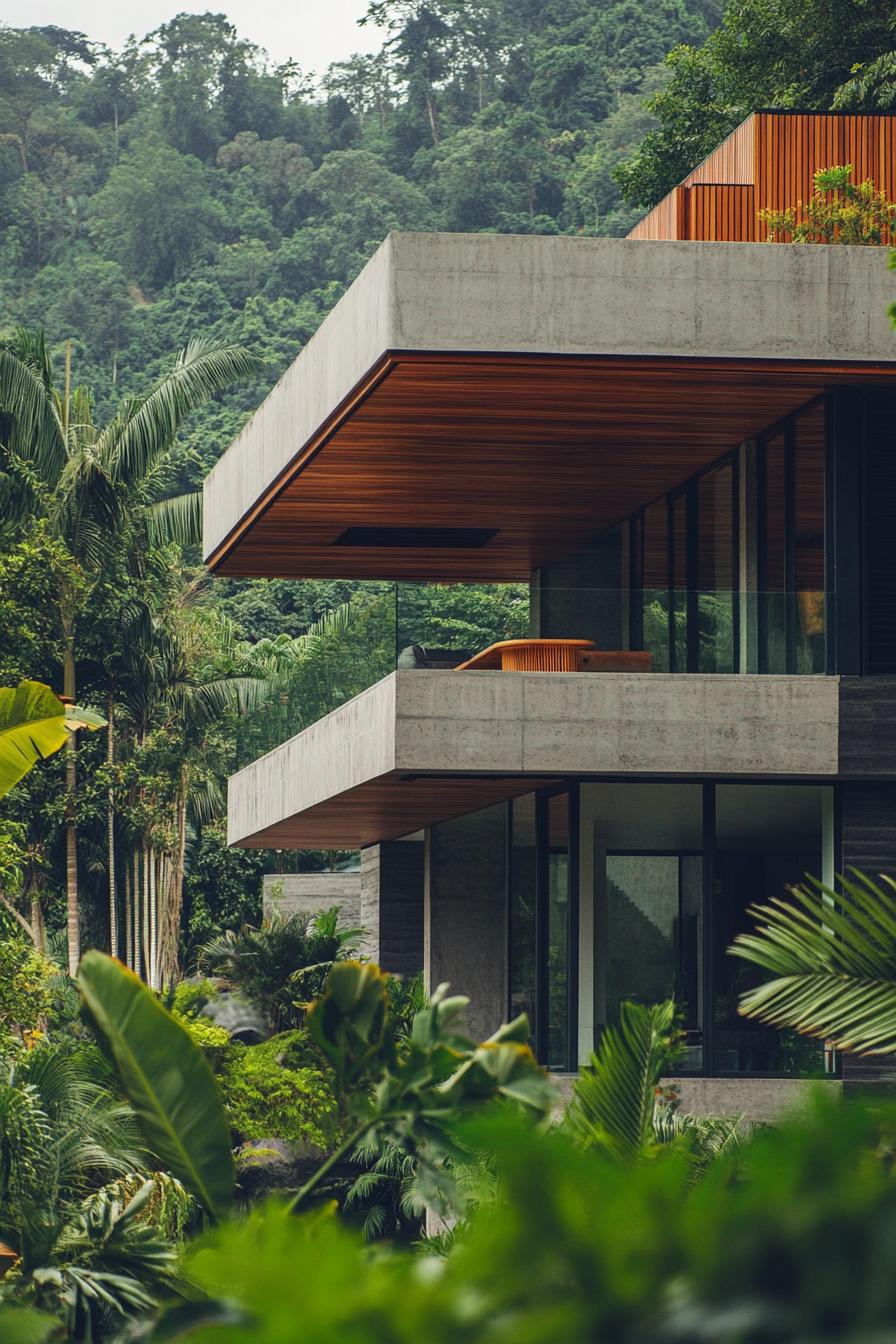
Board-formed patterns in warm brown or driftwood gray read as natural material from the sidewalk, while the wall itself stays solid concrete.
Concrete Screens With Perforations

Punched openings let daylight through while blocking sightlines. The look is quiet and polished, especially across a front entry or balcony.

From inside you see the street; from outside people mostly see pattern. It works like sunglasses for the house.

Hole shapes are yours to choose. Circles, slots, and staggered squares all cast their own pattern of light dots on the floor inside.

Air moves freely through the openings, which keeps covered porches cooler in summer without leaving the space exposed.
Facades With Bold Color Accents

A single saturated panel against gray concrete does a lot of work. Pigment mixed into the cast keeps the color from peeling later.

Try citrus yellow around a door frame or cobalt blue on a window reveal. Neon reads loudest on an otherwise plain wall.

One bright band across a facade stops traffic. Neighbors will use it to give directions to your street.

This suits anyone who thinks concrete deserves a personality. Two or three accent panels are plenty; more starts to compete with itself.
Sculptural Features on the Facade

Curved fins, cast reliefs, and folded bays turn a plain elevation into something closer to sculpture. The wall stops being background.

Projections create shadow lines that shift hour by hour. That movement gives the surface a sense of depth no paint can fake.

Treat the exterior like a canvas. Molds can be cast in waves, ribs, or wide ripples before the panels ever reach the site.

Visitors will think they’ve stepped into a modern art gallery.
Abstract Art in High Relief

High-relief abstract art on precast concrete facades makes your house look like a modern sculpture park.

It adds dynamic visual depth, casting interesting shadows throughout the day.

Patterns can range from geometric designs to fluid, organic shapes.

Your facade becomes a conversation starter and a true piece of art.
Aesthetics of Adaptive Reuse

Imagine giving an old factory building a stylish new lease on life.

The precast concrete facade can incorporate original elements of the building, blending history with modern design.

It’s like giving your grandpa a snazzy new suit—suddenly both vintage and hip.

The result is a unique and compelling architectural statement.
Concrete Surfaces With Mirror Finish

These surfaces boast a reflective finish, creating a stunning visual effect.

They make homes appear larger and more open.

Light bounces dramatically off these facades, adding both sparkle and depth.

A sleek, modern vibe oozes effortlessly from every mirrored inch.